


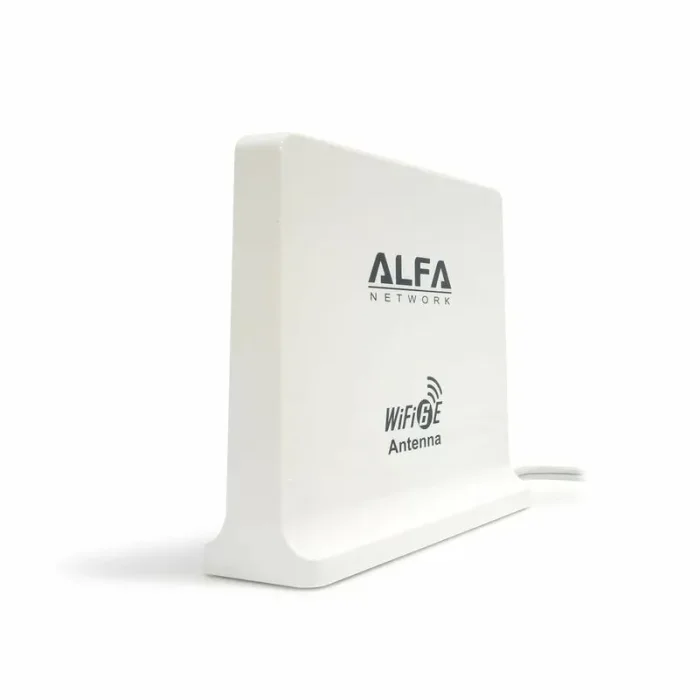



Dual-band & Tri-band Antennas: The Heart of Your High-Speed WiFi
The world of WiFi is developing rapidly. From simple home connections to the connected smart home - the demands on your wireless network are constantly increasing. But even the best router is of little use without the right antenna. Choosing a dual-band antenna or even a tri-band antenna is crucial to take full advantage of the speed and performance of modern standards like WiFi 6E and WiFi 7.
The Essentials: Understanding Your Frequency Ranges
Your WiFi antenna is the gateway to the wireless world. It must support the right frequency bands to communicate with your router and your devices.
2.4 GHz Band: The classic WiFi band. It offers a long range and penetrates walls well, but is often congested as many household appliances use this band.
5 GHz Band: This band offers higher speeds and is less crowded. It is the basis for standards like WiFi 5 (802.11ac) and ensures smooth HD streaming and gaming. However, its range is shorter than that of the 2.4 GHz band.
6 GHz Band: The brand new band for WiFi 6E and WiFi 7. It is exclusively reserved for these latest standards, which makes it extremely fast and practically free from interference.
A dual-band antenna supports the frequencies 2.4 GHz and 5 GHz, while a tri-band antenna additionally covers the new 6 GHz band.
WiFi 6E and WiFi 7: The Next Generation
WiFi 6E: The "E" stands for "Extended". This standard extends the capabilities of WiFi 6 by opening up the 6 GHz range for WiFi use. The result: wider channels, lower latency, and more bandwidth for a variety of devices.
WiFi 7: As the latest development, WiFi 7 builds on the foundations of WiFi 6E. A highlight is the Multi-Link Operation (MLO), which allows your device to communicate simultaneously on different frequency bands. This ensures a massive increase in speed and an even more stable connection.
To be able to use these speeds and functions, you need a tri-band antenna that supports all three frequency ranges.
Why the Right Antenna is So Important
A high-quality antenna is not only crucial for range, but also for efficiency. The MIMO technology (Multiple-Input, Multiple-Output), which is standard in modern routers, requires antennas that can process multiple data streams simultaneously. The better the antenna, the better the signal quality and the higher the actual data throughput.
Whether you are looking for a WiFi antenna for your home network, an office, or an industrial application, make sure it supports the right frequencies and standards. This is the only way to unleash the full potential of your router and create a powerful and future-proof wireless network.