




Updated: April 14, 2026 | By your WiFi technology expert team
Imagine your home as a digital command center. Whether it's your PC, laptop, smartphone, or smart TV – everyone wants to be online at the same time. The star of this show is your WiFi router. It acts as the digital gatekeeper, connecting all your devices and ensuring your data packets reach their destination safely and quickly.
The best part: Thanks to the router, everyone can be online simultaneously. But it does even more! It also functions as an Ethernet Switch, building a local area network (LAN). This allows your devices to "talk" to each other, for example, to exchange data at lightning speed or share a common printer.
Cables vs. Wireless: A Mixed Network Topology
In a modern setup, you typically use two paths for connectivity, as shown in the network topology below:
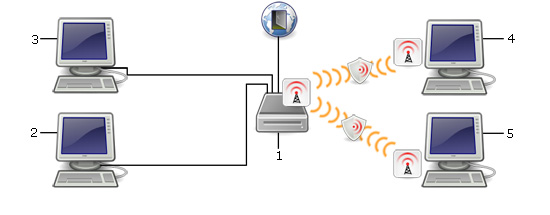
- Ethernet (Cabled): Ideal for stationary devices like gaming PCs or smart TVs. It provides the most stable and fastest connection.
- WiFi (Wireless): Provides maximum flexibility for smartphones, tablets, and laptops.
If your PC doesn't have built-in WiFi, a WiFi USB Adapter is a simple and effective solution for upgrading your hardware.
Key Terms Explained: IP, SSID, and DHCP
To ensure everything runs smoothly, your router uses several practical services:
- DHCP Service: Think of this as a digital postman. It automatically assigns a unique IP address to every device in the network. This IP is like a house number – without it, the router wouldn't know where to send the data.
- SSID (Service Set Identifier): This is simply the name of your WiFi. You can choose any name in your router settings. Pro Tip: You can hide the SSID to make your network invisible to strangers.
-
WiFi Channel: In the 2.4 GHz band, there are 13 channels. If many neighbors use the same band, it causes congestion. Modern routers often choose the channel automatically ("Auto-Channel") to avoid interference.
🚨 Crucial: Network Security
An unsecured WiFi is an invitation for unauthorized users. This is not only risky for your data but can also have legal consequences if your connection is misused for illegal activities.
Use WPA3: Make sure your network is protected with the latest WPA3 encryption standard. Also, choose a strong password (network key). Only those who know this code are allowed to enter your digital home.
Conclusion & Optimization Tip
Setting it up is just the beginning. If the signal is weak in the back of the house, you can often work wonders with a stronger antenna on the router or a higher-performance WiFi module on the end device. Whether you need a new router, high-quality network cables, or clever accessories – we are here to help you get the most out of your network.
FAQ: Common Questions About Setting Up WiFi
What is the difference between LAN and WLAN?
LAN (Local Area Network) refers to a cabled connection, which is particularly stable and fast. WLAN (Wireless LAN) is the wireless version for mobile freedom.
Why does every device need its own IP address?
The IP address serves as a unique address within your network. This is the only way the router can send data packets specifically to the correct device (e.g., your phone instead of your laptop).
What is WPA3 and why should I use it?
WPA3 is currently the most secure encryption standard for WiFi. It protects you significantly better against hacker attacks than the older WPA2 standard.